
Complete Rameshwaram Temple Tamil Nadu 2026. Darshan timings, 22 sacred wells, dress code, best time & Kashi-Rameshwaram yatra by Tripcosmos.
It is often said in Hindu tradition that a pilgrimage to Kashi (Varanasi) is incomplete without visiting Rameshwaram. This single sentence explains why the Ramanathaswamy Temple at Rameshwaram occupies such an extraordinary place in the Indian pilgrimage landscape.
It is one of the 12 Jyotirlingas, one of the four Char Dhams, and the southernmost anchor of India’s most sacred pilgrimage axis — with Kashi Vishwanath at the northern end. Ramanathaswamy Temple is an ancient Hindu temple complex in Rameshwaram, Tamil Nadu, home to one of the 12 Jyotirlingas and a mandatory pilgrimage stop for Char Dham devotees. For South Indian pilgrims, North Indian families completing the Kashi–Rameshwaram yatra, and for NRI devotees combining both Jyotirlingas in one trip, this guide covers everything needed for a complete and genuinely meaningful visit.
Rameshwaram Temple Tamil Nadu
Getting to Rameshwaram: All Transport Options
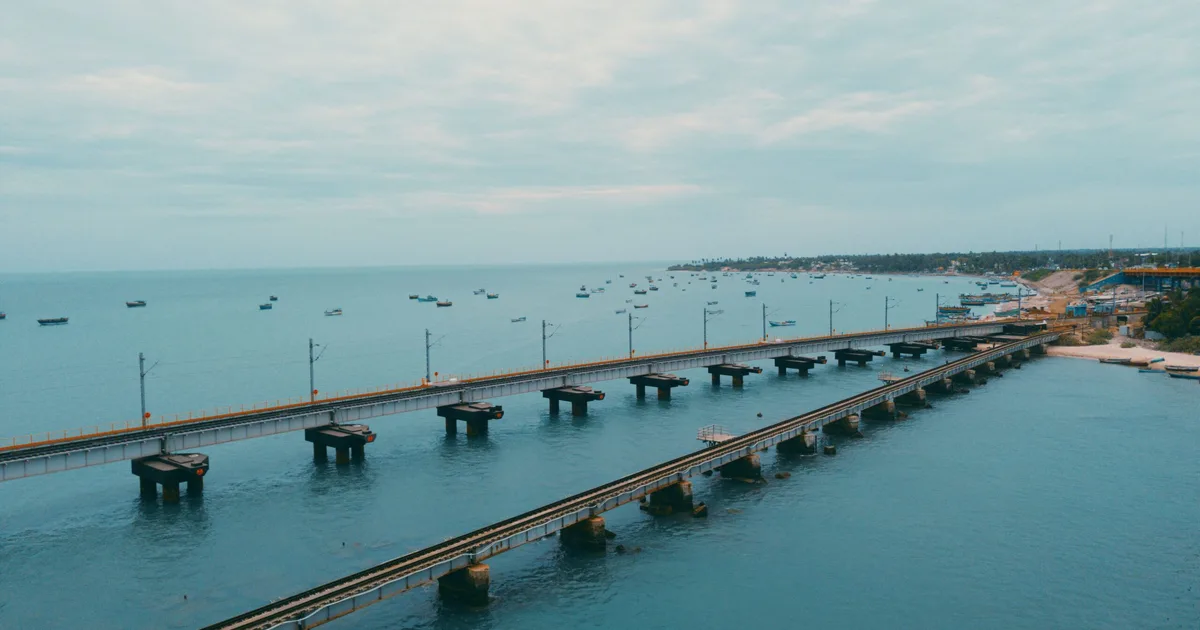
The nearest airport is Madurai International Airport (IXM), roughly 174 km away — approximately 3.5 hours by road. From Madurai, a private cab to Rameshwaram costs ₹2,500–₀3,500 one way for a sedan. The cab crosses the iconic Pamban Bridge — the 2-kilometre sea bridge connecting Rameshwaram Island to the Tamil Nadu mainland — one of the most visually striking approaches to any pilgrimage destination in India.
Rameswaram Railway Station (RMM) is in town and connects to cities like Chennai and Madurai by direct trains. The Rameswaram Express from Chennai takes approximately 10–12 hours. From Madurai, trains cover the 170 km in 3–4 hours. Train is the most popular option for pilgrims from Tamil Nadu, Kerala, and Andhra Pradesh. For North Indian pilgrims completing the Kashi–Rameshwaram yatra, the most practical routing is Varanasi → Chennai or Madurai by flight or train → Rameshwaram by private cab or train.
Ramanathaswamy Temple: The Darshan Process Explained
Rameshwaram temple opens 5 AM–9 PM daily with a 1–3 PM break. General darshan is free (1–3 hour wait); VIP costs ₹200 (15–30 min wait). Arrive by 4:30 AM on weekdays for the shortest queues.
The complete Rameshwaram pilgrimage unfolds in three phases — and understanding the correct sequence makes the difference between a rushed, confusing visit and a genuinely complete darshan.
Phase 1: Agni Theertham Beach Bath Agni Theertham is a sacred beach where pilgrims take a holy dip in the seawater — believed to wash away sins. The view of the beautiful horizon meeting the Bay of Bengal offers a serene beginning to the pilgrimage. This is the mandatory first step — enter the temple only after the Agni Theertham dip. Carry a change of clothes. The beach is a 5-minute walk from the East Gate of the temple.
Phase 2: The 22 Sacred Wells (Theertham) Bath This is the most distinctive ritual at Rameshwaram — and the one that surprises first-time visitors most. The temple has 22 internal sacred wells (theerthams), each with water of different compositions and temperatures. The ritual involves being bathed with water from each well in sequence — typically by temple staff with large brass pots. This ritual bath inside the temple corridors is conducted after the Agni Theertham dip and before proceeding to the main Jyotirlinga darshan. It costs approximately ₹25–₀50 per person at official counters. Allow 45–60 minutes for the complete theertham bath.
Phase 3: Ramanathaswamy Jyotirlinga Darshan After taking the bath at Agni Theertham and the 22 theerthams, one visits the Rameshwaram temple through the East Gate for the main darshan. The main Jyotirlinga — Ramanathaswamy — is in the innermost sanctum. General darshan is completely free, with 1–3 hour wait. VIP darshan at ₹200 reduces this to 15–30 minutes.
Temple Architecture: Why This Temple Is Extraordinary
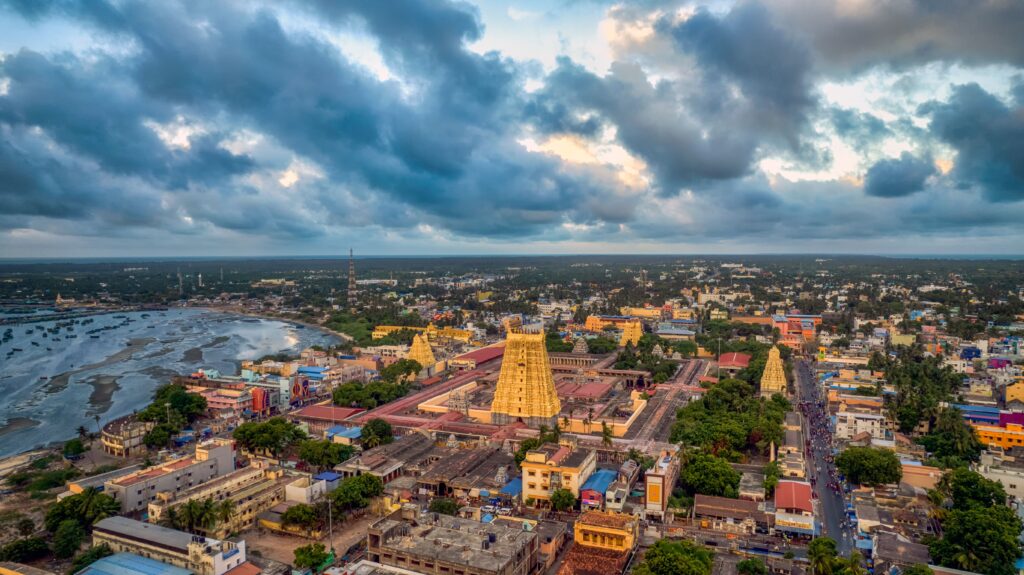
The temple has very long corridors — these corridors have many carved pillars and are one of the longest temple corridors in India. The temple’s outer corridor stretches 197 metres in length — the longest temple corridor in the world according to most architectural records. Over 1,200 intricately carved granite pillars line this corridor, each different from the others, creating a visual experience that no description fully prepares you for. The four towering gopurams (gateway towers) mark the cardinal directions of the temple complex.
Dress Code: Strictly Enforced
Wear clean, simple clothes for the temple. Keep your head covered if that is the custom you follow. For the 22 theertham bath inside the temple: men must wear dhoti only (upper body bare); women must wear saree. Western clothes, jeans, and salwar suits are not permitted inside the ritual area. For general darshan without the theertham bath: men in full pants and shirt; women in saree or salwar with dupatta. Rent dhoti and saree at shops outside the temple gate — plan ₹50–₀100 for rental plus ₹50 for shoe keeping.
Complete Rameshwaram Circuit Beyond the Main Temple
Common circuits combine Rameshwaram with nearby sacred sites: Rameswaram and Madurai — Meenakshi Amman Temple is about 170 km away, a 3–4 day trip covering both is very common. Rameswaram and Kanyakumari — the southernmost tip of India is about 280 km, combining both gives Jyotirlinga darshan and the three-seas confluence.
Dhanushkodi: An old town at the far end of the island hit hard by a big cyclone — some old buildings are still there as quiet ruins. The beach here is wide and empty at sunrise. Many people go early to see the sun come up over the sea. This is where Ram Setu (Adam’s Bridge) begins — the chain of limestone shoals connecting India and Sri Lanka. 20 km from Rameshwaram, accessible by special 4×4 vehicles for the final stretch. Allow 3 hours for the Dhanushkodi excursion.
Gandhamadana Parvatham: A spiritual and scenic hill spot offering panoramic views of Rameswaram and glimpses of Sri Lanka on clear days. Houses a footprint of Lord Rama (Paada Theertham) at the hilltop shrine. Allow 30 minutes.
Panchamukhi Hanuman Temple: A uniquely significant Hanuman shrine on the island with a five-faced idol. Allow 20 minutes.
Honest Accommodation Guide
Budget: Temple Trust guesthouses and dharamshalas near the temple offer basic, clean rooms at ₹300–₀800 per night. Mid-range: Several hotels in the ₹1,000–₀2,500 range are available in the main town area. Hotel Tamil Nadu (TTDC) is a reliable option with decent facilities. Comfortable: A few hotels at ₹3,000–₀5,000 offer better amenities — some have sea views. Book minimum 3–4 weeks in advance for October–March and festival periods. If visiting during Maha Shivaratri, book 4–6 weeks in advance — rooms fill up very quickly.
Best Time to Visit Rameshwaram
Quietest days: April, May, September (off-season). Tuesday–Thursday have the shortest general queues; Monday, Friday, and weekends are busier due to weekend travelers. October to February is the most comfortable climate window — temperatures 22–30°C, ideal for the outdoor theertham bathing and beach rituals. Maha Shivaratri is the peak festival — by dawn, 20,000+ are in queue; waits exceed 5–8 hours. The Kashi–Rameshwaram Yatra is a sattvic pilgrimage. The traditional practice is strict vegetarianism throughout the journey — no meat, no eggs, no alcohol, no onion, no garlic.
The Kashi–Rameshwaram Connection
The Kashi-Rameshwaram Yatra is a pilgrimage that connects two of the twelve Jyotirlingas: Kashi Vishwanath in Varanasi (Uttar Pradesh) and Ramanathaswamy in Rameswaram (Tamil Nadu). For serious devotees, completing both in one yatra is a lifelong aspiration. The practical format in 2026 is Varanasi (2–3 days) → flight to Madurai → Rameshwaram (2 days) → Madurai (1 day for Meenakshi Amman) → return. Tripcosmos manages the Varanasi end of this complete yatra — VIP Kashi Vishwanath darshan, sunrise Ganga boat ride, and Ganga Aarti — while the southern circuit is arranged through Tamil Nadu-based operators.
Plan Your Rameshwaram Pilgrimage with Tripcosmos
For North Indian pilgrims beginning the Kashi–Rameshwaram yatra from Varanasi, Tripcosmos manages the complete Varanasi sacred circuit as the first leg. The Varanasi Jyotirlinga Tour Package from Tripcosmos and the Kashi Vishwanath Temple Darshan Package cover VIP darshan, private boat, scholar guide, and all logistics.
Website: https://tripcosmos.co WhatsApp: +91 9336116210
Conclusion
Rameshwaram is not simply a South Indian temple destination — it is the southern anchor of the most sacred pilgrimage axis in Hinduism. The 22 sacred wells, the Agni Theertham beach dip, the Ramanathaswamy Jyotirlinga darshan, and the Dhanushkodi sunrise together make it one of the most complete and most deeply moving pilgrimage experiences in India.
Two days is the right allocation. October to February is the right season. VIP darshan at ₹200 is worth every rupee. And completing this yatra alongside Kashi Vishwanath in Varanasi is the most spiritually significant two-Jyotirlinga circuit a devotee can undertake in a lifetime. For historical context, the Wikipedia article on Ramanathaswamy Temple is essential reading before your visit.
FAQ Section
Q1: What is Rameshwaram temple famous for?
Sitting gracefully on Pamban Island in Tamil Nadu, the Ramanathaswamy Temple stands as one of the 12 Jyotirlingas, one of the four Char Dhams, and is famous for its 22 internal sacred wells, the world’s longest temple corridor with 1,200 carved pillars, and its deep connection to the Ramayana — the site where Lord Rama prayed to Lord Shiva after returning from Lanka.
Q2: What are the temple timings at Rameshwaram in 2026?
Rameshwaram temple opens 5 AM–9 PM daily with a 1–3 PM break. General darshan is free with 1–3 hour wait. VIP darshan costs ₹200 with 15–30 minute wait. Arrive by 4:30 AM on weekdays for the shortest queues.
Q3: What is the dress code for Rameshwaram temple?
For the 22 theertham bath inside the temple: men must wear dhoti with bare upper body; women must wear saree. For general darshan: men in full pants and shirt; women in saree or full-sleeve salwar with dupatta. Western clothing and jeans are not permitted. Dhoti and saree rental is available outside the East Gate at ₹50–₀100.
Q4: How many days should be planned for Rameshwaram?
Two full days is the recommended allocation — Day 1 for Agni Theertham, the 22 sacred wells bath, and main Jyotirlinga darshan plus the evening Dhanushkodi excursion. Day 2 for Gandhamadana Parvatham, Panchamukhi Hanuman Temple, and a second darshan if required. A three-day visit allows the Madurai Meenakshi Amman extension as a day trip.
Q5: What is the Kashi–Rameshwaram Yatra and how is it planned?
The Kashi-Rameshwaram Yatra connects two of the twelve Jyotirlingas: Kashi Vishwanath in Varanasi and Ramanathaswamy in Rameswaram. The practical 2026 format is Varanasi (2–3 days managed by Tripcosmos) → flight to Madurai → Rameshwaram (2 days) → return. Tripcosmos manages the Varanasi leg with VIP darshan coordination. WhatsApp +91 9336116210 for the North India circuit pricing.




[…] between 5:30 AM and 6:30 AM are strongly recommended for the Delhi to Mathura Vrindavan day trip — reaching Mathura by 8:00 AM to 8:30 AM allows your group to visit Krishna Janmabhoomi before the […]